Battery swapping intelligence for electric boda fleets
How STIMA helps operators run swap stations, monitor battery health, automate rider payments, and scale EV fleets across emerging markets.
Battery fleet management built for emerging markets
EV Riders Kenya, a boda-boda fleet of 200 electric motorcycles operating across Nairobi, Mombasa, and Kisumu, faced mounting losses from unexpected battery degradation, unplanned swap station outages, and no visibility into individual battery health.
They partnered with STIMA — a 100% hardware-agnostic B2B SaaS — to deploy the full battery intelligence stack: swap & charge operations, real-time tracking, safety alerts, predictive maintenance, lifetime optimization, and financial performance dashboards on a single platform.
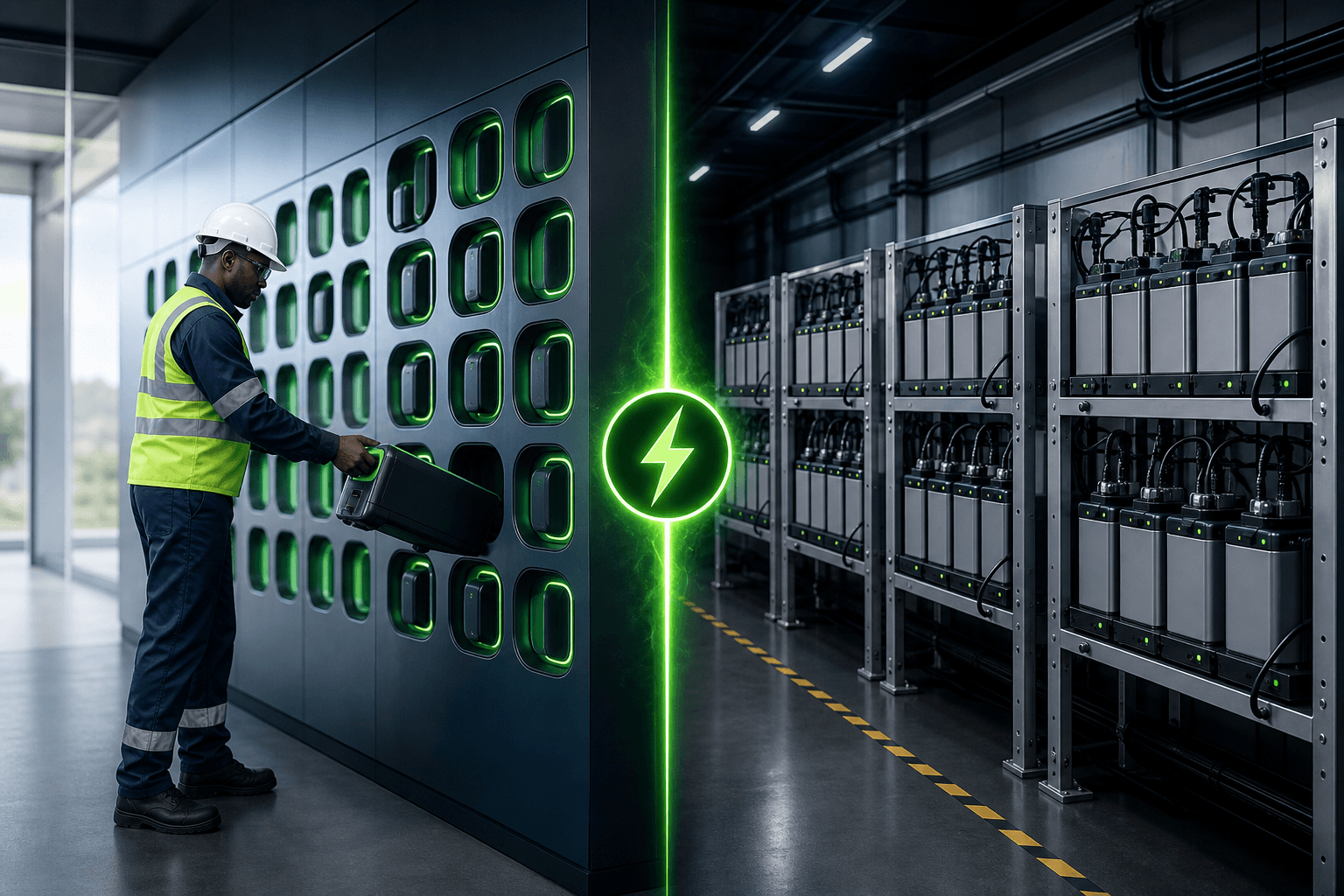
"Boost your EV business with battery intelligence — the battery fleet management SaaS built to scale EVs across emerging markets."
STIMA · Battery Fleet Management Platform"Electric vehicles: not just a mode of transportation, but a symbol of our collective resolve to drive change and usher in a new era of mobility"
STIMA Design Team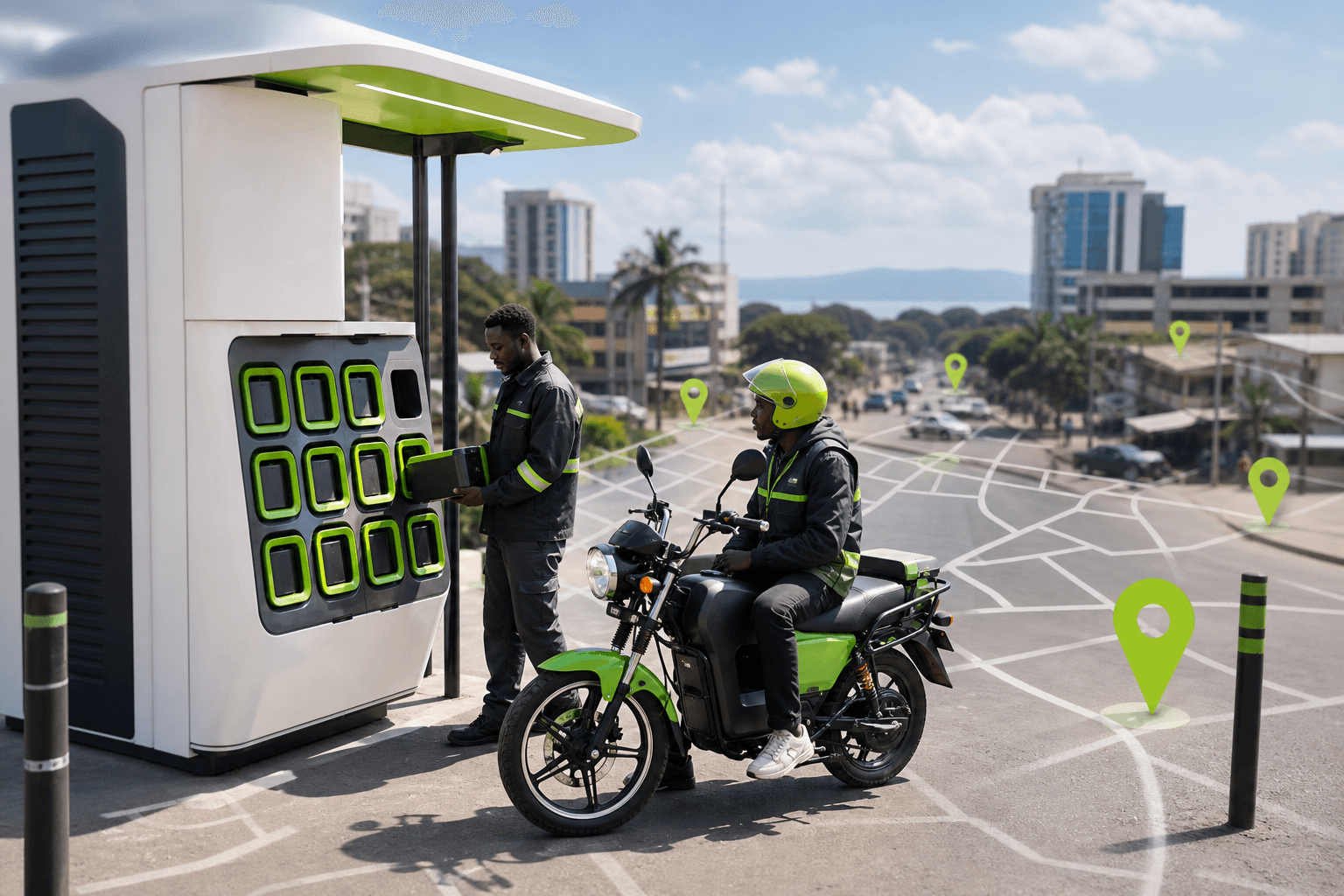
Three problems draining profitability
Before deploying STIMA, EV Riders Kenya was managing their fleet using spreadsheets and manual inspections. The gaps were costly.
No Battery Visibility
Batteries were treated as black boxes. Operators couldn't tell a battery was failing until a rider broke down mid-route, causing revenue loss and customer churn.
Safety Incidents
Two batteries entered thermal runaway during a single quarter. Without smart alerting, detecting unsafe charging conditions was impossible before incidents escalated.
Unclear ROI on Assets
With no per-battery financial tracking, profitable and unprofitable battery packs looked identical. The operator was replacing batteries too early and too late simultaneously.
100% hardware-agnostic battery intelligence SaaS
Five integrated modules. One unified platform — built to power swap stations, keep fleets profitable, and scale EV operations across emerging markets.
Battery Swapping & Charging
Run intelligent swap stations and charging hubs at scale — from rider authentication to optimal pack rotation and station-level performance analytics.
- Battery & swapping operations
- Real-time battery tracking & monitoring
- Driver & Swapper Apps
- Smart algorithms for station sizing
Rider App & Swapper App
Purpose-built mobile experiences for every actor at the swap station — keeping riders moving and operators in control.
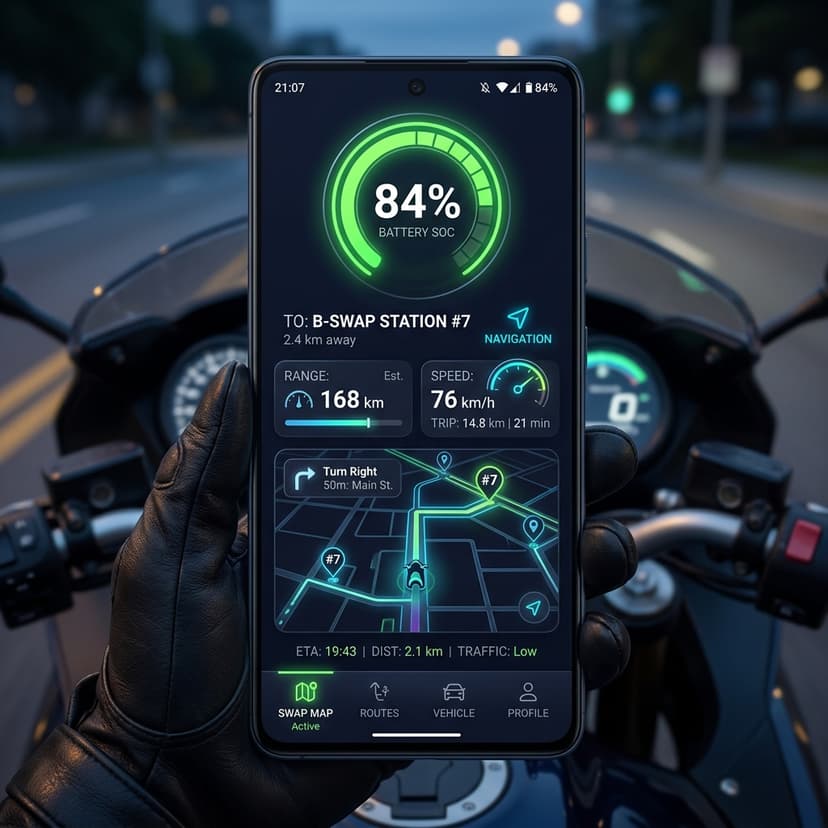
Rider App
Find the nearest swap station, check battery availability and stay in flow — without a single phone call to dispatch.
- Check current battery charge level
- Locate stations & live battery availability
- Swap history & receipts
- Easy API integration with partner services
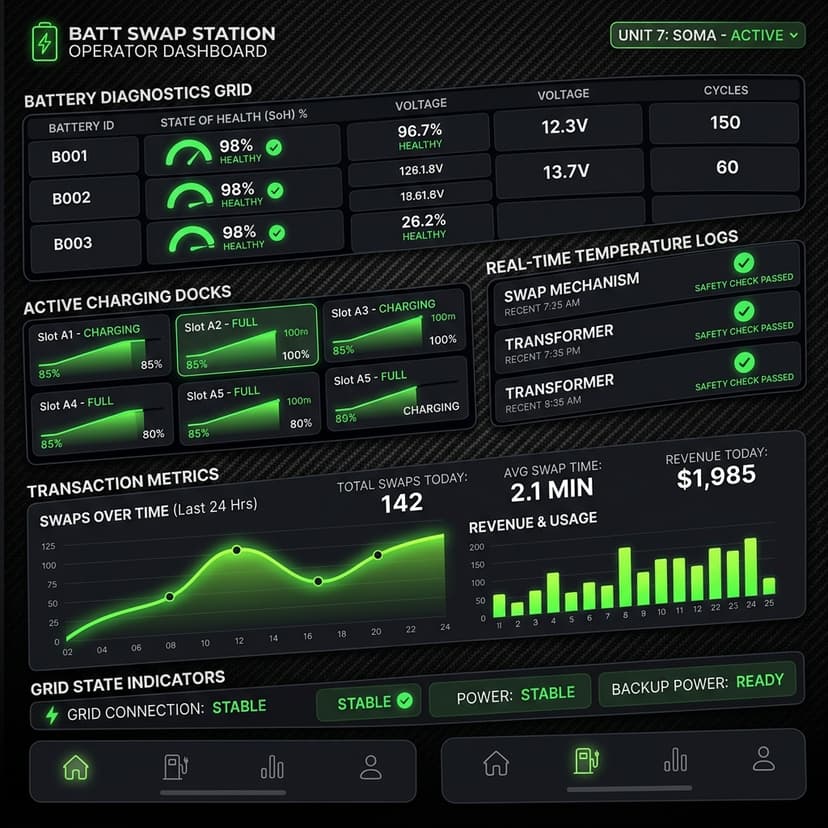
Swapper App
Every swap is recorded, billed and audited in real time — turning a manual counter into a connected station.
- Record swaps in under 10 seconds
- Automated rider payments
- Monitor charge level of every pack
- Instant safety alerts on anomalies
STIMA's full-stack deployment
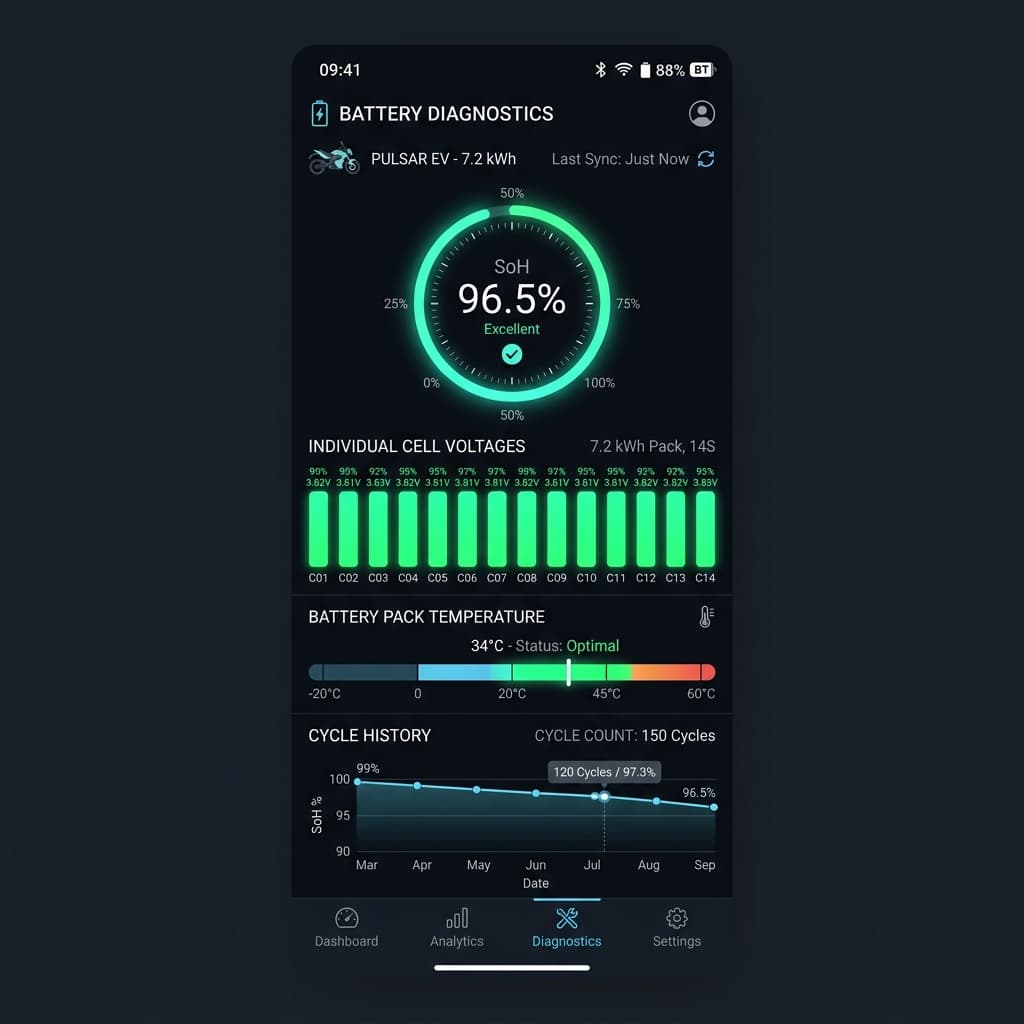
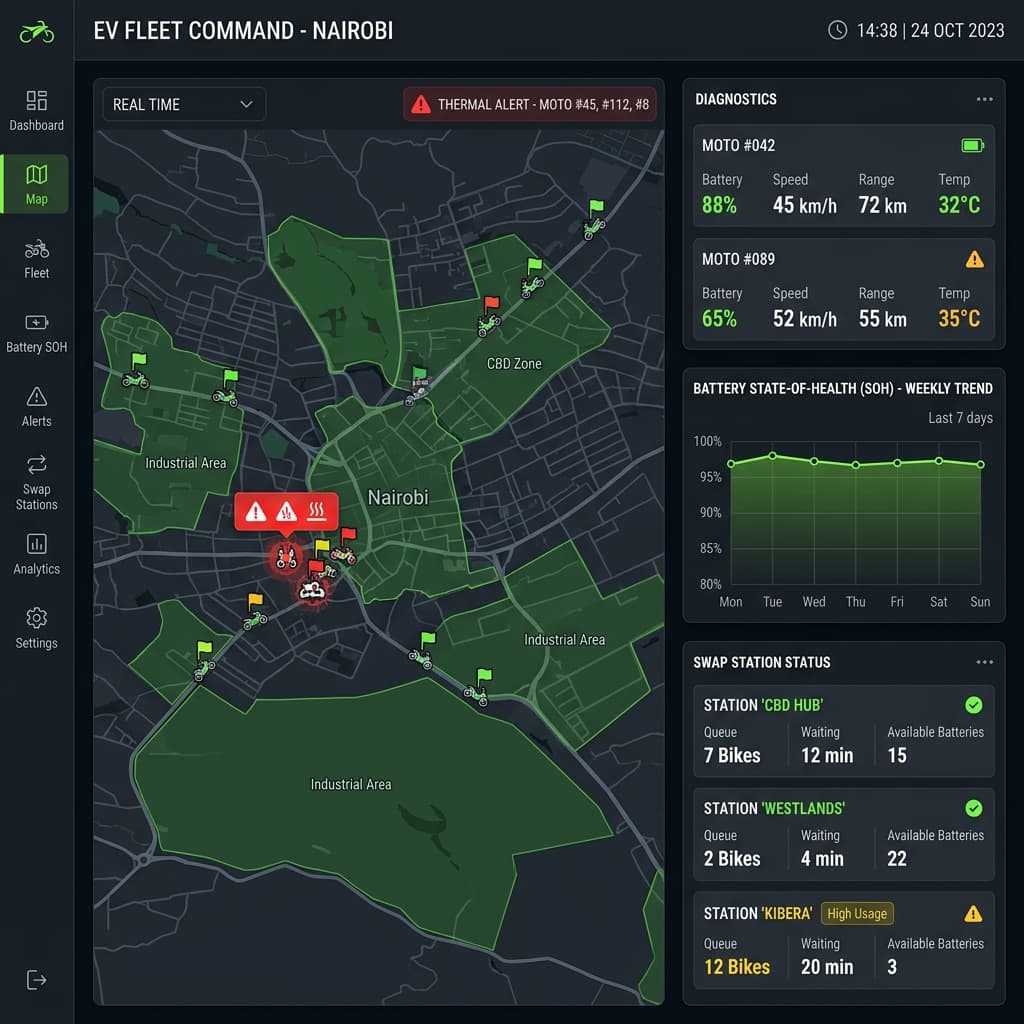
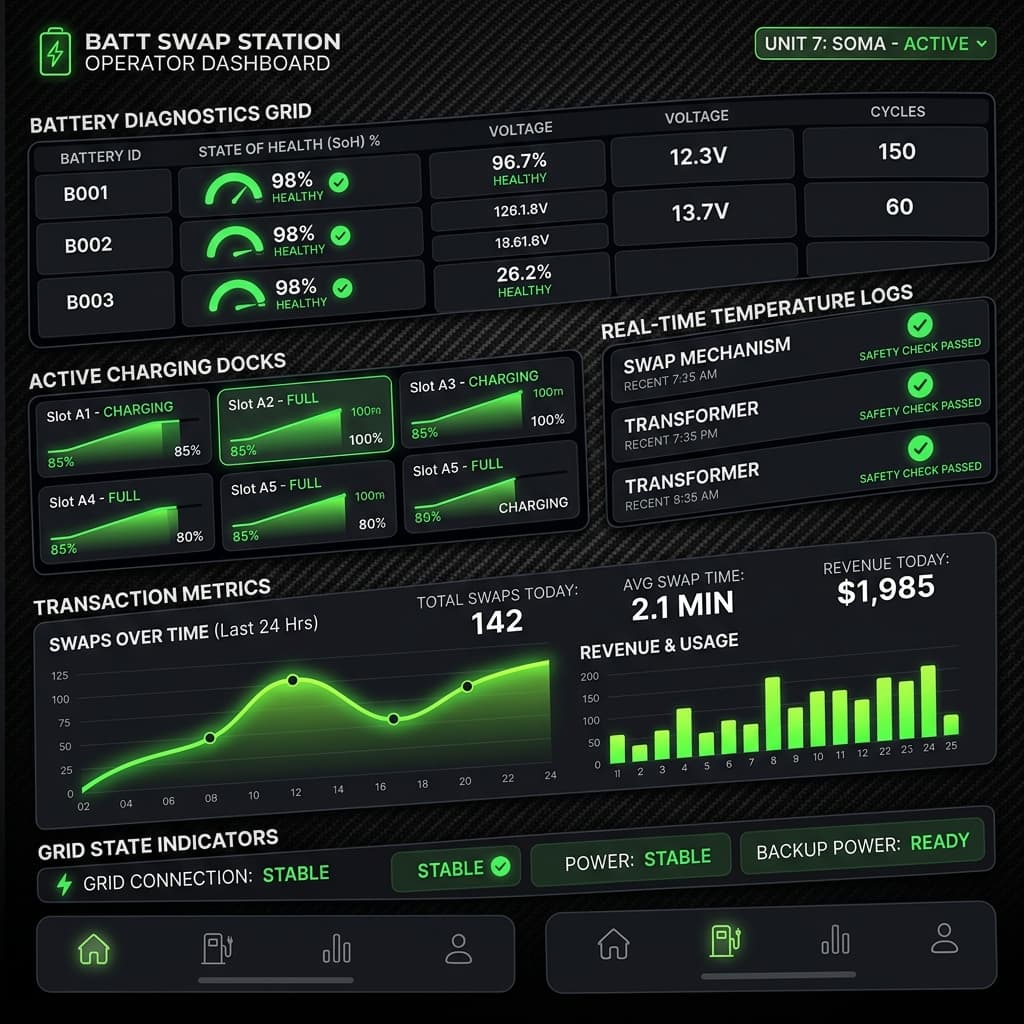
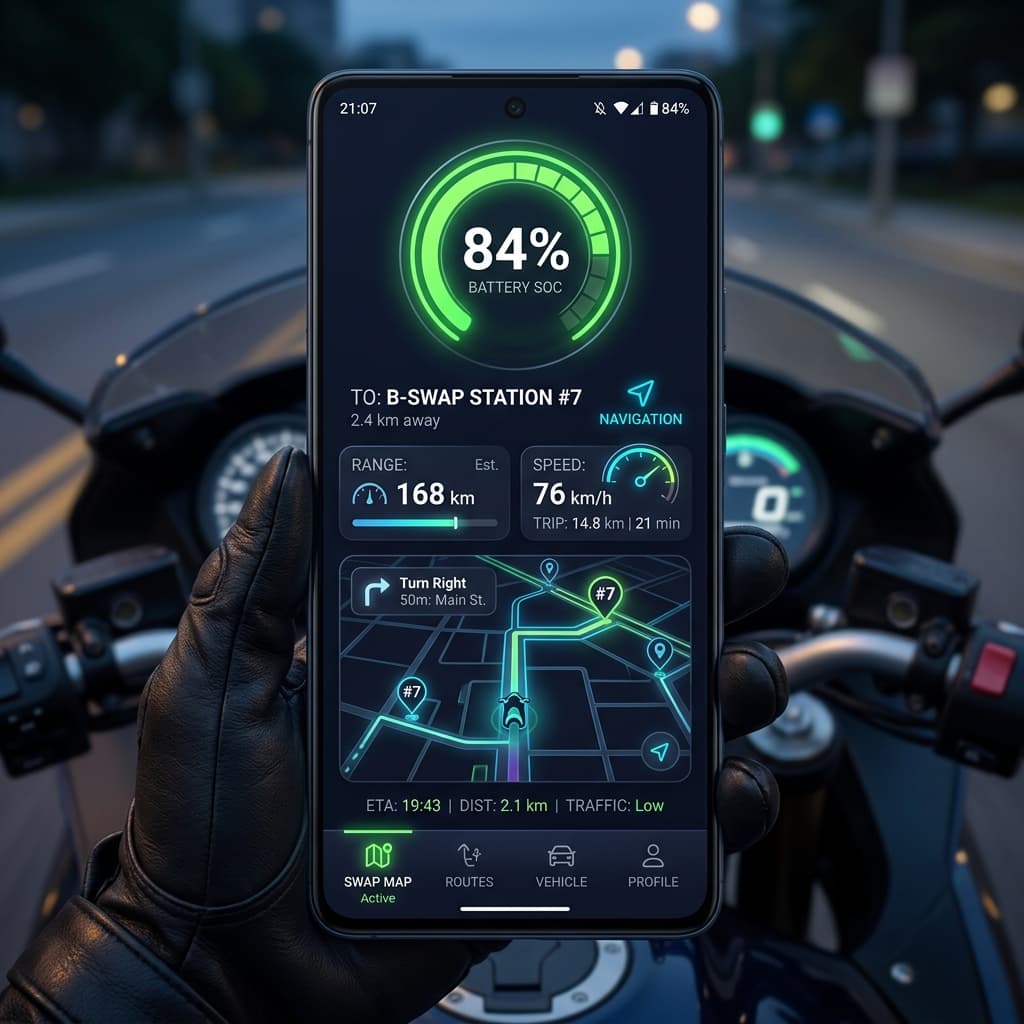
Technology & Precision
Advanced battery intelligence systems built to optimize and scale last-mile electric motorcycle fleet operations across East Africa.
One platform. Every stakeholder.
Hardware-agnostic by design, STIMA already powers thousands of swaps a month while connecting every actor across the EV battery supply chain.
Design improvement & warranty
Fleet-wide telemetry feeds product teams with data to refine designs and process warranty claims faster.
Cell-level performance insights
Real-world degradation data flows back to pack manufacturers for design improvement and warranty support.
Run profitable stations
Swap management, payment models, station sizing and charging strategies — orchestrated from one dashboard.
Last-mile, ride-hailing & delivery
Rider usage statistics through Driver App API integration powers fleet management and last-mile delivery ops.
Per-asset financial truth
Revenue, ROI and risk are tracked per battery and per station — finally bankable e-mobility assets.
Verified credits & resale
Generate carbon credits and unlock a bidding platform for second-life battery sales.
12 months. Measurable impact.
Reduction in Unplanned Downtime
Predictive alerts and pre-emptive battery replacements kept riders on the road and revenue flowing.
Monthly Swap Throughput
Smart station algorithms and driver app integration eliminated swap queues and idle battery stock.
Battery Fire Incidents
Zero thermal runaway events in 12 months. Smart alerts caught every anomaly before escalation.
Tons of CO₂ Avoided
Fleet optimization and extended battery lifetimes contributed directly to verified carbon credit generation.
Increase in Battery Lifetime
Health optimization and proper charging protocols extended average battery life beyond OEM projections.
Batteries Saved by Predictive ML
Flagged and replaced before failure, each preventing an average of 3 days of rider downtime.
Tailored e-mobility solutions to grow your battery business
From station sizing to financial modelling, STIMA's experts work alongside your team to deploy and scale EV fleets across emerging markets.
Any questions?
Common questions about IoT, battery swapping, telemetry, and fleet management technology used in electric mobility platforms.
IoT in an EV fleet connects battery packs, vehicles, and swap stations through embedded sensors and controllers. Each device continuously collects data — state of charge, temperature, voltage, location — and transmits it over cellular or local networks to a cloud platform. Fleet operators use dashboards to monitor every asset in real time, while drivers and field staff receive live updates through mobile apps.
IoT devices publish telemetry to cloud APIs via MQTT, REST, or WebSocket connections. Mobile apps subscribe to those data streams and push notifications, displaying live battery status, nearest swap stations, and safety alerts. During a swap, the app can authenticate the rider via Bluetooth or RFID, read the incoming pack's data, and trigger the station controller to release a fully charged battery — all within seconds.
A rider arrives at a swap station with a depleted battery pack. The swapper — or an automated rack — removes the empty pack and installs a fully charged one, typically in under 30 seconds. The depleted pack is placed on a charging slot while the rider continues their route. Each transaction is logged digitally: pack IDs, state of charge, rider authentication, and station inventory are updated across the fleet management platform in real time.
Real-time telemetry is the continuous streaming of live data from battery packs to a central monitoring system. Key parameters include state of charge (SoC), state of health (SoH), cell-level voltage, internal temperature, charge and discharge current, cycle count, and GPS location. High-frequency updates enable instant safety alerts, accurate fleet visibility, and the data foundation for predictive analytics and financial reporting per battery asset.
Predictive maintenance uses machine learning models trained on historical battery performance data — discharge curves, temperature patterns, and cell resistance over thousands of swap cycles. When the model detects micro-anomalies that precede failure, it flags the battery for preemptive replacement weeks before a breakdown occurs. This shifts maintenance from reactive roadside repairs to planned warehouse swaps, reducing downtime and extending overall fleet uptime.
A typical architecture has four layers: (1) Field layer — BMS retrofits, swap controllers, and sensors on batteries and stations; (2) Connectivity layer — CAN-bus, cellular, Bluetooth, and RFID linking devices to the cloud; (3) Cloud layer — telemetry ingestion, APIs, alerting engines, and ML pipelines; (4) Application layer — driver and swapper mobile apps plus a web-based fleet dashboard. Hardware-agnostic design allows the same platform to integrate packs and controllers from different manufacturers.